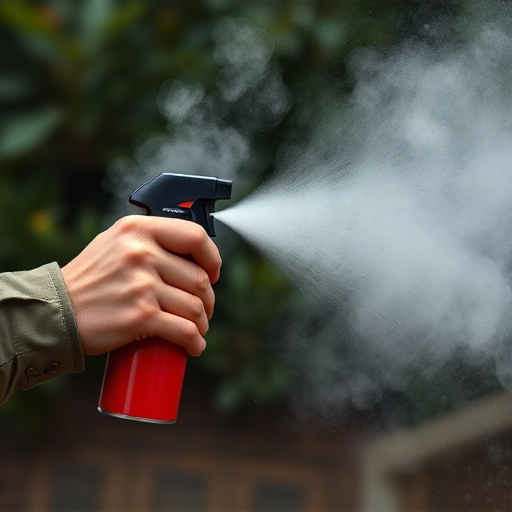
Understanding crowd dynamics is crucial for effective deployment of crowd control pepper spray, which irritates eyes, nose, and respiratory tract. In dense crowds, its impact can be amplified, necessitating strategic techniques like targeting legs to disrupt momentum without endangering individuals. Training is vital for law enforcement to master "push-and-jet" technique, ensure bystander safety, comply with legal protocols, and understand varying legal considerations across jurisdictions.
Riot control pepper spray canisters have long been a contentious tool in managing crowd dynamics. This article delves into the multifaceted world of crowd control pepper spray techniques, exploring key aspects such as understanding crowd behavior and the effectiveness of these canisters. We’ll dissect application methods for maximal impact while examining safety, training, and legal considerations crucial to responsible use. By embracing these insights, law enforcement agencies can enhance their strategies in maintaining public order.
- Understanding Crowd Dynamics and Pepper Spray Effectiveness
- Application Techniques for Optimal Impact
- Safety, Training, and Legal Considerations in Riot Control
Understanding Crowd Dynamics and Pepper Spray Effectiveness
Understanding crowd dynamics is crucial when discussing crowd control pepper spray techniques. Crowds can exhibit complex behaviors, from peaceful assembly to violent rioting, and their actions often depend on the presence and movements of law enforcement officers. Effective crowd control requires a strategic approach that considers the unique characteristics of each situation. Pepper spray, a common tool in such scenarios, works by irritating the eyes, nose, and respiratory tract, temporarily incapacitating individuals. Its effectiveness can be influenced by several factors: wind direction (which can carry the spray away from the target), distance (spray loses potency over time and distance), and the specific chemical composition of the pepper spray used.
Crowd dynamics also play a significant role in determining how pepper spray is perceived and used. In dense crowds, the impact can be amplified due to the confined space, making it a powerful crowd control mechanism but also potentially leading to unintended consequences if not handled with care. Law enforcement agencies must employ trained professionals who understand these dynamics to ensure that crowd control measures are proportionate and respect individual rights.
Application Techniques for Optimal Impact
The application of crowd control pepper spray, often in the form of canisterized inflammatory spray, requires a strategic approach for optimal impact during riot or protest scenarios. Law enforcement and security personnel must employ specific techniques to ensure the effective dispersion of the spray while minimizing off-target effects and potential harm to bystanders. One key technique involves aiming at the legs and feet of the crowd, as this targets individuals’ mobility without endangering upper body areas. By focusing on the lower body, officers can disrupt the crowd’s forward momentum and encourage dispersal.
Additionally, the use of a “push-and-jet” technique enhances precision and range. This method involves pushing the canister slightly away from the target while simultaneously activating it, allowing for a controlled spray pattern that follows the movement of the crowd. Such techniques require training and practice to master, ensuring that law enforcement can effectively manage large gatherings while adhering to safety protocols.
Safety, Training, and Legal Considerations in Riot Control
In the high-pressure environment of riot control, safety is paramount. Law enforcement and security personnel must be adequately trained in the responsible use of crowd control pepper spray techniques, ensuring minimal harm to bystanders and compliance with legal protocols. Rigorous training programs teach officers how to accurately assess situations, select appropriate non-lethal weapons, and deploy chemical agents effectively while maintaining public safety.
Legal considerations play a crucial role in riot control strategies. The use of crowd control pepper spray is governed by specific laws and regulations that vary across jurisdictions. Understanding the legal framework surrounding its application helps protect both the public and law enforcement from potential misuse or abuse. Officers must be familiar with their rights and responsibilities, as well as the potential consequences of excessive force, to navigate these complex scenarios successfully.
Crowd control pepper spray, while a powerful tool in riot control, requires careful consideration of crowd dynamics, application techniques, and safety protocols. Understanding the effectiveness of such sprays against different types of crowds is key to optimal impact. Proper training and adherence to legal guidelines ensure responsible use, minimizing harm and maximizing public safety during high-tension situations. By integrating these Crowd Control Pepper Spray Techniques, law enforcement agencies can effectively navigate challenging scenarios, demonstrating a balanced approach to maintaining order in today’s diverse and dynamic landscapes.